Cool Decking in the Desert: What It Is, Why It Matters, and How to Keep It Looking Good

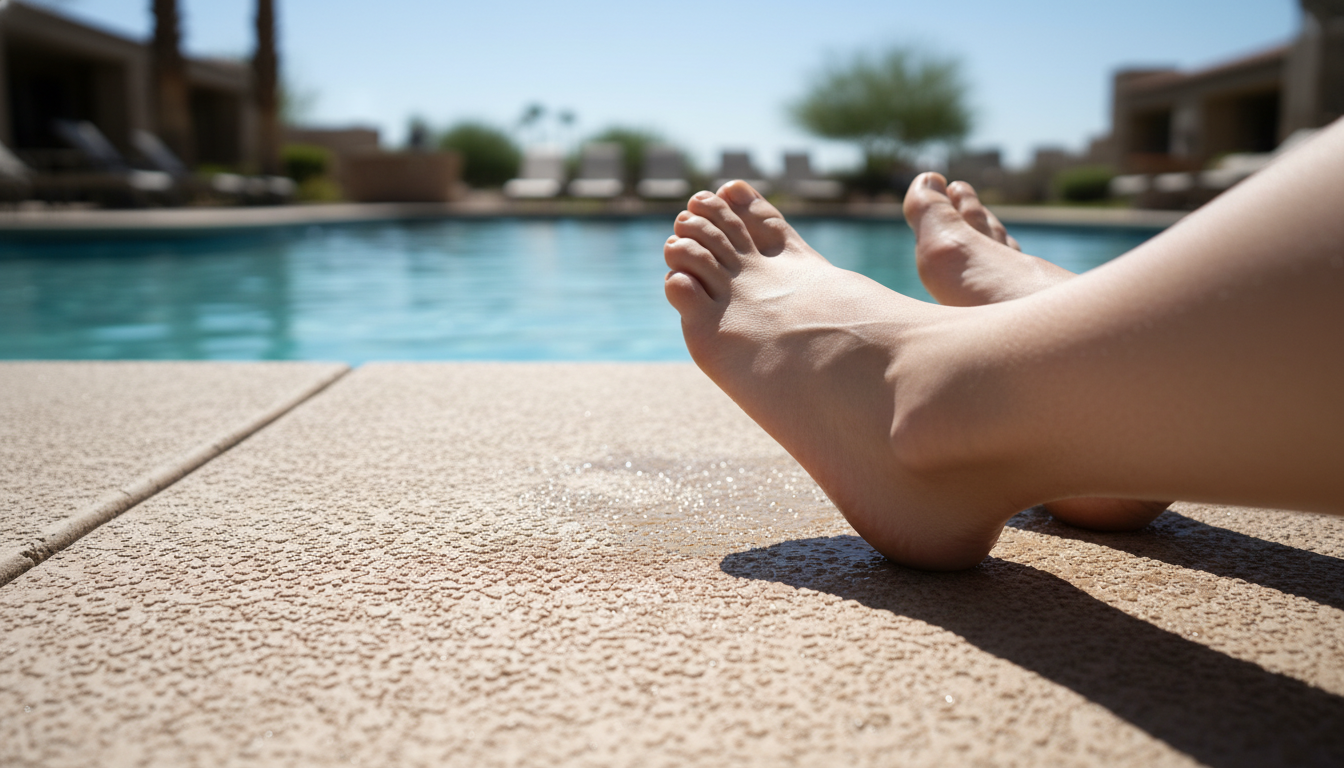
If you’ve ever walked barefoot across a pool deck in July and felt like the concrete was actively trying to cook you, you already understand the problem cool decking solves. In the Southwest, an ordinary slab around a pool can hit 140 degrees or more in direct sun. Cool decking is the fix, and it has become close to standard for any outdoor space built to be used during an Arizona summer.
This guide covers what cool decking actually is, how it works, the different types you’ll run into, what it costs to maintain, and how to tell when yours needs attention. Whether you’re planning a new patio or staring at a cracked, faded deck that has seen better summers, you’ll know what you’re looking at by the end.
What Cool Decking Actually Is
Cool decking is a textured coating applied over concrete. The name “Kool Deck” started as a specific brand, the original Keystone Kool Deck by Mortex, which was actually invented back in 1962. Over the years it became the catch-all term people use for any cool-to-the-touch pool deck surface, the same way people say “Kleenex” for tissue. There’s a nice bit of trivia here for desert dwellers: the product was developed in the Southwest specifically because this is where bare pool decks turn into griddles.
The coating does two jobs at once. First, the lighter color reflects sunlight instead of soaking it up the way bare gray concrete does. Second, the textured, slightly porous surface holds a thin layer of moisture and traps tiny air pockets, which slows down how fast heat transfers to your feet. The result is a surface that can run 20 to 40 degrees cooler than untreated concrete sitting in the same sun.
It is not magic and it is not air conditioning for your patio. On a brutal afternoon a cool deck will still be warm. But it is the difference between “warm” and “I need to sprint to the nearest towel.”
Why It Matters More in Arizona Than Almost Anywhere
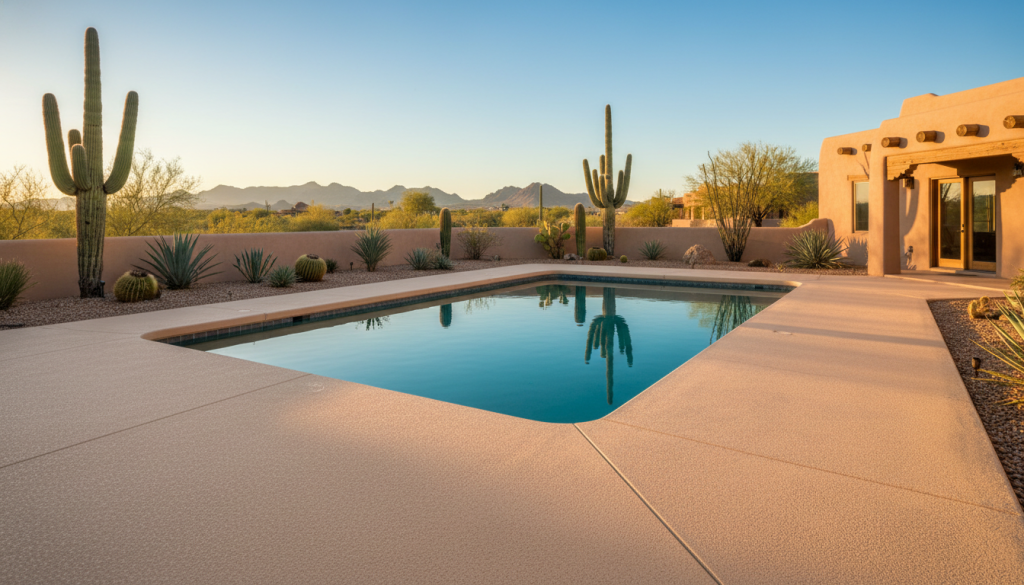
In a lot of the country, a pool deck is a pool deck. Here it’s a heat-management decision.
A few reasons cool decking earns its keep in the desert:
- Barefoot comfort. This is the obvious one. Pools get used barefoot, and kids don’t think about where they step. A surface that doesn’t burn is the whole point.
- It protects the concrete underneath. A coating takes the UV punishment so the slab doesn’t. Sun, monsoon rain, and the constant freeze-warm swing of desert nights all chew up bare concrete over time. A maintained coating extends the life of the slab below it.
- Glare and appearance. Bare concrete around a bright pool throws a lot of glare. A textured, tinted surface cuts that down and frankly just looks finished instead of industrial.
- Slip resistance. The texture that keeps the surface cooler also gives wet feet something to grip. Around a pool, that matters.
The Main Types of Cool Decking
Not all cool deck surfaces are the same product, and the differences matter when you’re deciding what to install or how to repair what you have.
Acrylic cool deck coatings. The most common modern option. Acrylic-based coatings go on over existing concrete, come in a wide range of colors, and resist UV fading well. They’re popular for resurfacing jobs because they can go right over a tired slab and make it look new.
Texture-finish (the classic “Kool Deck” style). This is the troweled, knockdown texture a lot of older Arizona homes have. It’s applied to fresh concrete during the original pour or as a re-coat. It has a distinctive mottled look and a gritty feel underfoot.
Concrete overlays and micro-toppings. A thicker resurfacing layer that can be stamped, stained, or textured. Good when the existing deck has surface damage you want to hide but the underlying slab is still sound. This category has gotten popular across the wider Southwest, not just Arizona. Crews like Apex Concrete in Albuquerque do a lot of cool deck overlays for the same reason, since New Mexico summers punish bare concrete every bit as hard as ours do.
Rubberized and spray surfaces. Softer underfoot and very slip-resistant, often used where comfort is the top priority. Pricier and with their own maintenance quirks.
Which one is right depends on your existing deck, your budget, and how much heat relief versus looks you’re after.
Cool Decking Wears Out. Here’s What That Looks Like
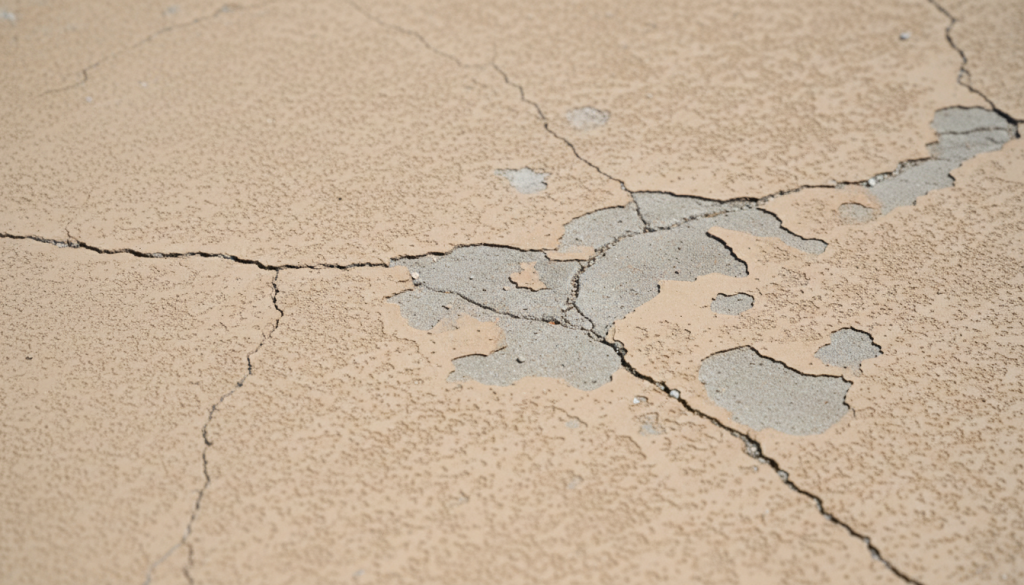
This is the part people tend to ignore until it’s bad. Cool decking is a coating, and coatings have a lifespan. Desert sun is unusually hard on them. A well-installed cool deck might look great for 8 to 12 years, but the surface does break down, and a few problems are common enough to watch for:
- Cracking. Small hairline cracks are normal as concrete moves. Wide or spreading cracks are not, and they let water under the coating where it can lift and spread.
- Flaking, peeling, or chipping. Usually a sign the coating has lost its bond with the slab, often from water getting underneath or from age.
- Fading and chalkiness. The color washes out and the surface starts to feel dusty. Mostly cosmetic, but it’s the early warning that the coating is near the end.
- Hot spots. If parts of the deck suddenly feel hotter than they used to, the coating there has worn thin and stopped doing its job.
- Rough or abrasive patches. When the texture starts shedding, it goes from “grippy” to “sandpaper on bare feet.”
Caught early, most of this is a straightforward repair or a re-coat. Left alone, water works its way into the cracks, the damage spreads under the surface, and what could have been a patch job turns into tearing out and redoing the whole deck.
Repair, Resurface, or Replace?
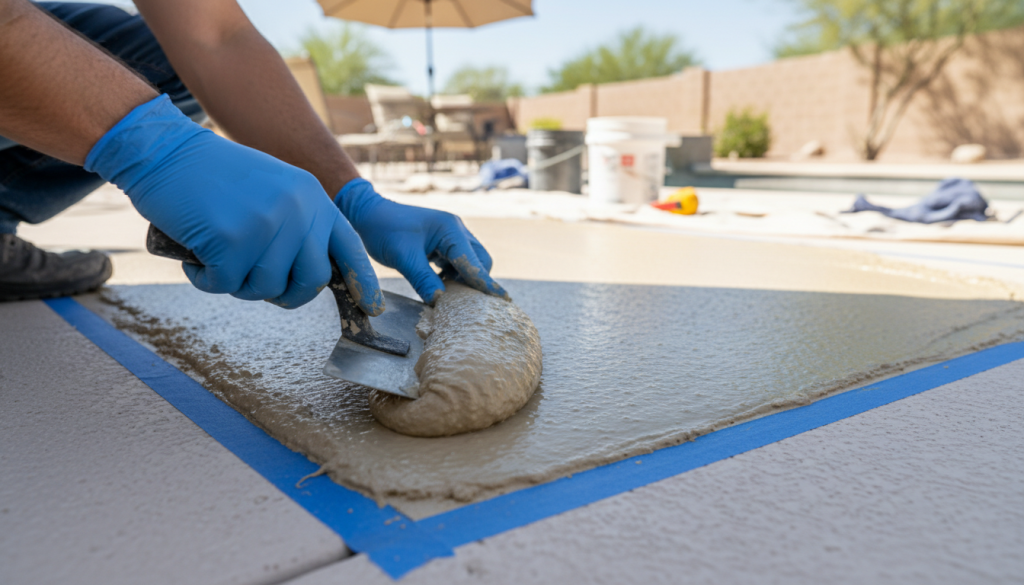
When something’s wrong with a cool deck, there are three levels of fix, and choosing the right one saves money.
Repair handles localized problems. A section of cracking, a peeling corner, a worn patch. A good repair blends into the surrounding surface so you can’t tell where the work was done. This is the cheapest route and the right call when most of the deck is still solid.
Resurfacing re-coats the whole deck. Worth it when the surface is uniformly faded, worn, or dated, but the concrete underneath is structurally fine. You get a brand-new surface and color without the cost of new concrete.
Replacement means tearing out the slab and pouring new. Only necessary when the concrete itself has failed, with deep structural cracks, heaving, or settling. It’s the most expensive option, which is exactly why catching surface problems early matters so much.
Honest assessment is the key here, and it’s where a lot of homeowners get oversold. Not every faded deck needs to be ripped out. A reputable installer will tell you when a repair will hold and when it genuinely won’t.
What It Costs to Keep a Cool Deck Healthy
Maintenance is cheap compared to replacement, which is the whole financial argument for staying on top of it.
Day to day, a cool deck wants very little:
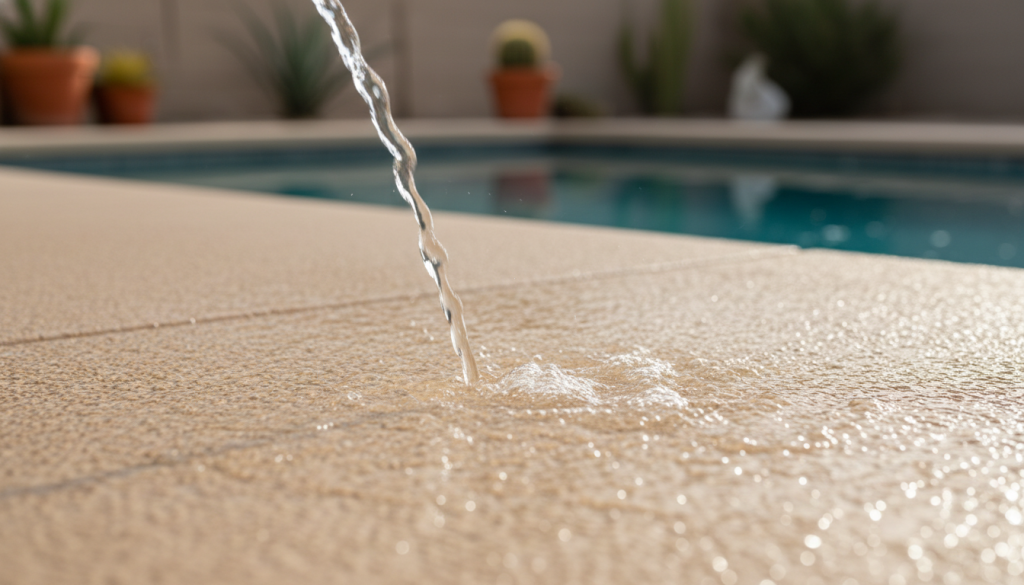
- Rinse it down every so often to keep grit and debris from grinding into the texture.
- Clean stains with mild soap and water, not harsh acid washes that strip the coating.
- Reseal every few years depending on the product. Sealing protects the color and the surface from UV and water. This is the single most cost-effective thing you can do to stretch the life of the deck.
- Deal with cracks early before water gets in and turns a small fix into a big one.
The pattern is simple. Small, regular upkeep is inexpensive. Deferred maintenance is what gets pricey, because desert sun and monsoon water don’t pause while you put it off.
When to Bring in a Pro
Plenty of cool deck care is genuinely DIY. Rinsing, basic cleaning, and keeping an eye on the surface are all things any homeowner can handle.
Where it’s worth calling someone is anything involving the coating itself. Color-matching a repair so it disappears, diagnosing whether a crack is cosmetic or structural, applying a new texture coat evenly, and getting the surface prep right so the new coating actually bonds. These are the steps where a botched DIY job tends to cost more to fix than it would have cost to do right the first time. Coating that doesn’t bond just peels off again in a season.
If you’re in Southern Arizona and dealing with a deck that’s cracking, peeling, or just baking your feet, it’s worth getting an honest read from a local crew that does this for a living. We’ve had good experiences pointing readers toward a Tucson team that handles cool deck repair and resurfacing, since desert decks have quirks that an out-of-region installer won’t always account for. Local crews know what monsoon season and 110-degree summers do to these surfaces, and they price the repair-versus-replace call honestly instead of defaulting to the most expensive option.
The Short Version
Cool decking keeps your pool deck usable when the desert is doing its worst. It works by reflecting heat and texturing the surface so it doesn’t scorch bare feet, and it protects the concrete underneath while it’s at it. Like anything that lives outdoors in Arizona sun, it wears out, but a little regular maintenance and an early repair when something cracks will keep it looking good and feeling cool for a decade or more. The mistake to avoid is waiting until a small surface problem becomes a full tear-out. Catch it early, reseal it on schedule, and your deck will outlast a lot of other things in your yard.